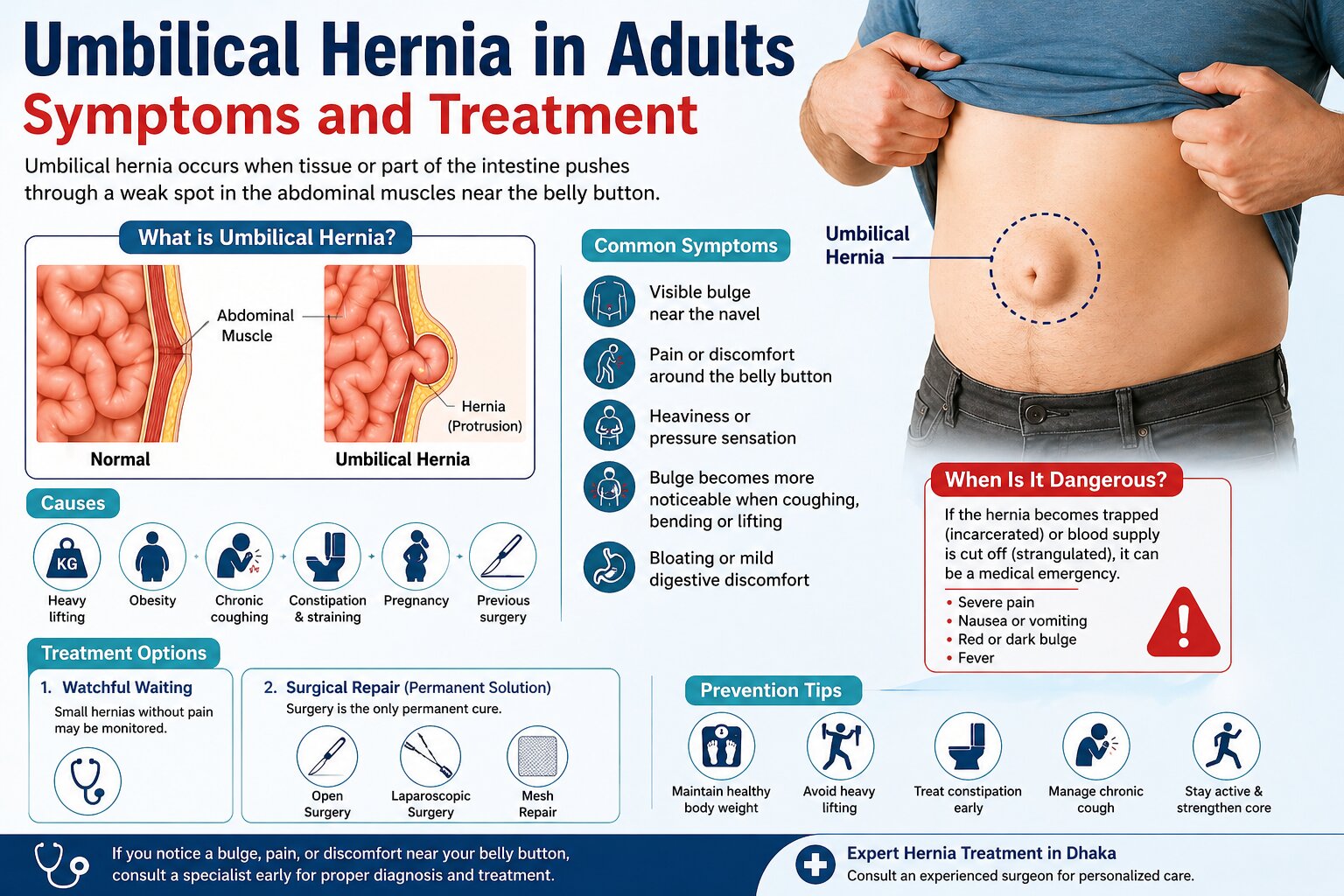
Umbilical Hernia in Adults – Symptoms and Treatment
Category: Piles Treatment
Published on 26 Apr, 2026
Umbilical Hernia in Adults – Symptoms and Treatment
An umbilical hernia occurs when part of the intestine, fat, or abdominal tissue pushes through a weak spot in the abdominal wall near the belly button. While umbilical hernias are more common in infants, they can also affect adults and may become painful or dangerous if left untreated.
Many adults ignore the early signs because the swelling may come and go or cause only mild discomfort. However, understanding the symptoms and treatment options can help prevent complications.
What Is an Umbilical Hernia?
An umbilical hernia develops when the abdominal muscles around the navel become weak or stretched, allowing tissue to protrude through the opening.
The bulge may become more noticeable when:
- Coughing
- Laughing
- Standing for a long time
- Lifting heavy objects
- Straining during bowel movements
In some cases, the bulge may disappear when lying down.
Symptoms of Umbilical Hernia in Adults
Symptoms can vary depending on the size and severity of the hernia.
1. Visible Bulge Near the Belly Button
The most common symptom is a soft swelling or lump near the navel.
2. Pain or Discomfort
You may feel discomfort or pain when:
- Bending over
- Lifting heavy objects
- Coughing or sneezing
- Exercising
3. Pressure or Heaviness
Some people feel a pulling or pressure sensation around the belly button.
4. Swelling That Increases Over Time
The hernia may gradually become larger if untreated.
What Causes Umbilical Hernia in Adults?
Umbilical hernias in adults often occur due to increased pressure inside the abdomen.
Common causes include:
- Obesity
- Pregnancy or multiple pregnancies
- Heavy lifting
- Chronic coughing
- Constipation and straining
- Previous abdominal surgery
- Fluid buildup in the abdomen
When Is an Umbilical Hernia Dangerous?
Small hernias may not cause serious problems initially, but complications can occur.
Incarcerated Hernia
The tissue gets trapped and cannot be pushed back inside.
Strangulated Hernia
Blood supply to the trapped tissue is cut off, which is a medical emergency.
Emergency warning signs include:
- Severe pain
- Nausea or vomiting
- Red, purple, or dark bulge
- Fever
How Is Umbilical Hernia Diagnosed?
Doctors usually diagnose an umbilical hernia through a physical examination.
In some cases, tests such as:
- Ultrasound
- CT scan
- MRI
may be recommended to assess complications.
Treatment Options for Umbilical Hernia
1. Watchful Waiting
If the hernia is small and painless, doctors may monitor it.
2. Surgical Repair
Surgery is the only permanent treatment.
- Open hernia repair
- Laparoscopic surgery
- Mesh repair surgery
Laparoscopic surgery offers:
- Smaller cuts
- Less pain
- Faster recovery
- Less scarring
For advanced treatment options, visit:
Advanced Hernia Treatment in Dhaka
Learn more about the specialist here:
Recovery After Surgery
Recovery time depends on the type of surgery.
- Most patients return home the same day
- Light work within a few days
- Full recovery within 2–6 weeks
Following your doctor’s instructions can speed up healing.
How to Prevent Umbilical Hernia
- Maintain healthy body weight
- Avoid heavy lifting
- Treat constipation early
- Manage chronic cough
- Strengthen abdominal muscles safely
Final Thoughts
Umbilical hernia in adults may start as a small painless bulge, but it can become larger and dangerous over time.
If you notice swelling or pain near your belly button, consult a specialist early to avoid complications and receive proper treatment.
Frequently Asked Questions (FAQ)
1. Can an umbilical hernia heal without surgery?
No, surgery is the only permanent treatment.
2. Is umbilical hernia dangerous?
It can become dangerous if trapped or strangulated.
3. Can adults live with an umbilical hernia?
Small hernias may be monitored, but they often enlarge over time.
4. Is umbilical hernia surgery painful?
Modern laparoscopic surgery usually causes less pain.
5. How long does recovery take?
Most patients recover within 2–6 weeks.
6. What happens if I ignore an umbilical hernia?
It may become larger or lead to complications.
7. When should I see a doctor?
If you notice swelling, pain, or color changes near the belly button.

