Which Piles Surgery Is Less Painful Laser or Traditional?
Category: Piles Treatment
Published on 24 Feb, 2026
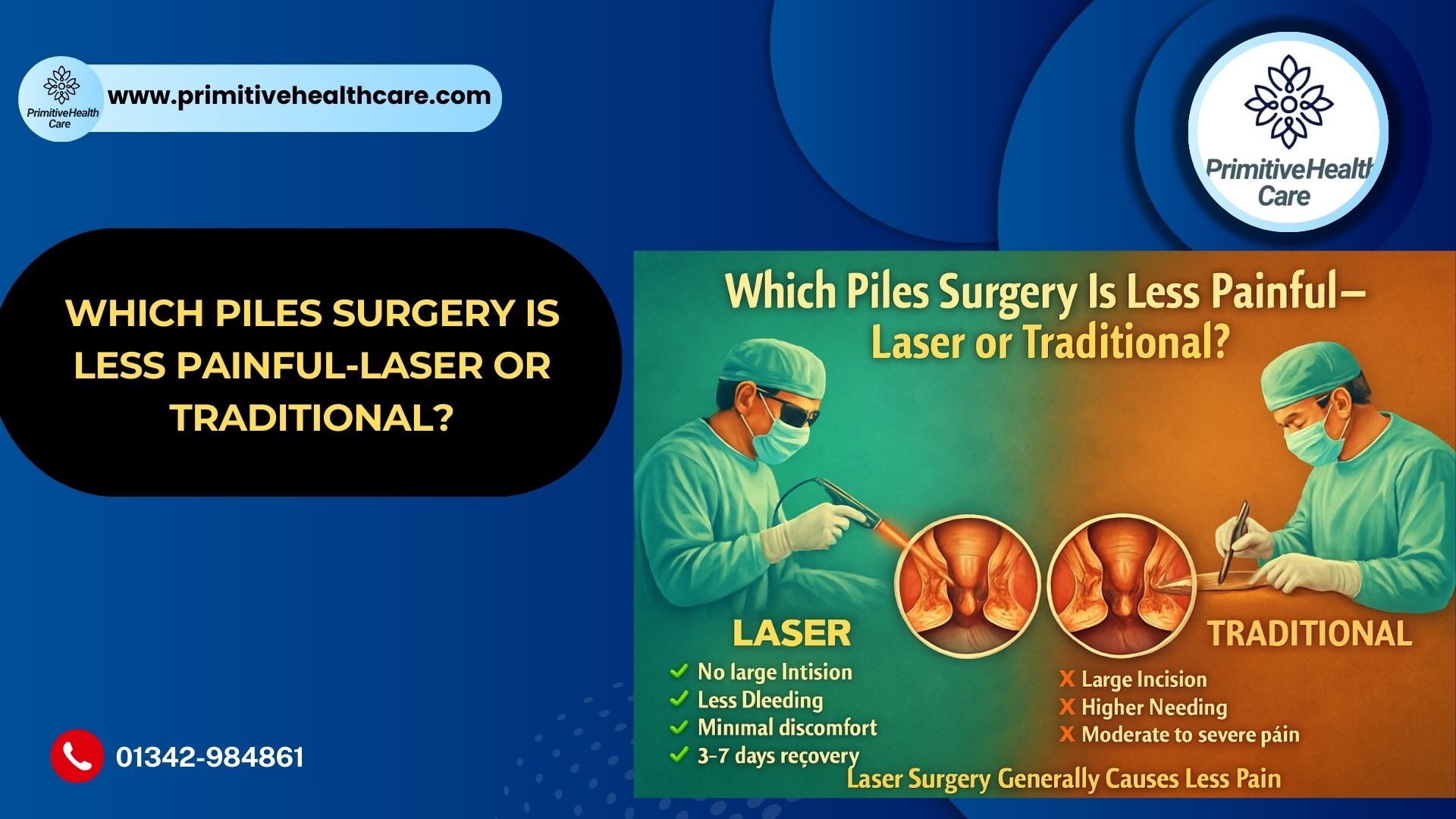
Which Piles Surgery Is Less Painful – Laser or Traditional?
If you’ve been advised to undergo piles surgery, your biggest concern is probably pain.
It’s completely normal to ask:
Which piles surgery is less painful – laser or traditional?
No one wants to go through unnecessary discomfort. The good news is that modern medical advancements have made piles treatment much more comfortable than it used to be. In this detailed guide, we’ll compare laser and traditional piles surgery in terms of pain level, recovery time, safety, and overall patient experience.
By the end of this article, you’ll have a clear understanding of which option may suit you best.
Understanding Piles (Hemorrhoids)
Piles, also known as hemorrhoids, are swollen veins in the lower rectum or around the anus. They can cause:
- Pain during bowel movements
- Bleeding
- Itching
- Swelling
- Discomfort while sitting
- Prolapse (piles coming outside)
When medications, ointments, and lifestyle changes fail, surgery becomes necessary to remove or shrink the swollen tissue.
Traditional Piles Surgery – How Painful Is It?
Traditional piles surgery, also known as hemorrhoidectomy, involves surgically removing hemorrhoidal tissue using conventional instruments.
Why Can It Be Painful?
- Surgical cuts (incisions) are made
- Stitches may be required
- Open wound healing takes time
- Surrounding tissues may become inflamed
Because the anal area has many sensitive nerve endings, pain after traditional surgery can be moderate to severe during the first week.
What Patients Usually Experience:
- Pain while sitting
- Pain during bowel movements
- Discomfort for 1–2 weeks
- Need for pain medication
Recovery may take 2–4 weeks depending on the severity.
While effective, traditional surgery is often associated with more postoperative discomfort.
Laser Piles Surgery – Is It Less Painful?
Laser piles surgery is a minimally invasive technique that uses focused laser energy to shrink or remove piles without large incisions.
Why Laser Surgery Is Less Painful:
- No large surgical cuts
- Laser seals blood vessels instantly
- Reduced tissue trauma
- Less inflammation
- Minimal nerve damage
Most patients report mild discomfort rather than severe pain.
What Patients Usually Experience:
- Mild burning sensation
- Minimal bleeding
- Faster wound healing
- Shorter duration of pain
Recovery typically takes 3–7 days, and many patients return to normal activities quickly.
Direct Comparison – Laser vs Traditional Surgery Pain
| Factor | Laser Surgery | Traditional Surgery |
|---|---|---|
| Pain Level | Mild | Moderate to Severe |
| Tissue Damage | Minimal | Higher |
| Bleeding | Very Less | More |
| Recovery Time | 3–7 Days | 2–4 Weeks |
| Hospital Stay | Same Day | 1–3 Days |
From a pain perspective, laser surgery clearly offers a more comfortable experience for most patients.
Why Pain Differs Between the Two
Type of Incision
Traditional surgery involves cutting tissue. Laser surgery does not.
Inflammation
Open wounds cause more inflammation and discomfort.
Healing Process
Laser treatment promotes faster tissue sealing and healing.
Nerve Sensitivity
Laser energy reduces trauma to surrounding nerves.
These factors make laser surgery less painful overall.
What About Pain During Bowel Movements?
After traditional surgery, bowel movements can be painful for several days because of open wounds.
With laser surgery, since there are no large incisions, bowel movements are generally less painful during recovery.
Proper diet, hydration, and stool softeners help reduce discomfort in both cases.
Does Less Pain Mean Less Effective?
Some patients worry that a less painful surgery may not be as effective.
That is not true.
Both laser and traditional surgery can provide permanent relief when performed properly. Laser surgery is simply a more advanced technique that reduces trauma while achieving similar results.
Who Should Choose Laser Surgery?
- Patients afraid of pain
- Working professionals needing quick recovery
- Moderate to severe piles cases
- Patients wanting minimal hospital stay
- Individuals concerned about bleeding
When Is Traditional Surgery Recommended?
- Piles are extremely large
- There are multiple complications
- Laser equipment is not available
- Additional anorectal procedures are required
In complex cases, open surgery may still be the best option.
Emotional Reality – Why Fear of Pain Stops Many Patients
Many people delay treatment because they fear surgical pain. Unfortunately, untreated piles can lead to:
- Chronic bleeding
- Severe anemia
- Infection
- Constant discomfort
- Reduced quality of life
Modern laser technology has significantly reduced postoperative pain, making surgery far less intimidating than before.
Long-Term Comfort Matters
Pain is not just about the procedure—it’s also about recovery.
- Faster return to work
- Less emotional stress
- Minimal disruption of daily life
Traditional surgery may require longer downtime. For many patients, this difference is significant.
Final Verdict – Which Piles Surgery Is Less Painful?
If pain is your main concern, laser piles surgery is generally less painful than traditional surgery.
- ✓ Minimal discomfort
- ✓ Faster healing
- ✓ Less bleeding
- ✓ Short hospital stay
- ✓ Quicker return to normal life
However, the final decision should always be based on medical evaluation and surgeon recommendation.
FAQ – Which Piles Surgery Is Less Painful?
1. Is laser piles surgery completely painless?
No surgery is completely painless, but laser surgery is significantly less painful than traditional surgery.
2. How long does pain last after traditional piles surgery?
Pain may last for 1–2 weeks during recovery.
3. How long does pain last after laser piles surgery?
Most patients experience mild discomfort for a few days only.
4. Which surgery heals faster?
Laser surgery usually heals faster than traditional surgery.
5. Is laser surgery safe?
Yes, when performed by an experienced specialist.
6. Can piles return after surgery?
Yes, if lifestyle and diet changes are not maintained.
7. Should I choose surgery only based on pain?
No, the choice should be based on severity, medical advice, and overall health condition.

